
Fire resistant doors are a critical component of modern fire safety systems, designed to help contain fire, smoke, and heat within a specific area of a building. Unlike standard doors, fire resistant doors are manufactured using specially tested materials and certified components that can withstand fire exposure for a specified period, typically 30, 60, 90, or 120 minutes. Their primary purpose is to slow the spread of fire, protect escape routes, and provide occupants with valuable time to evacuate safely during an emergency.
Today, fire resistant doors are widely used in residential buildings, commercial complexes, hospitals, hotels, schools, warehouses, factories, and other facilities where fire safety is a priority. These doors form an essential part of a building’s passive fire protection system, working alongside fire-rated walls, ceilings, and partitions to create protective compartments that limit the spread of flames and smoke.
A fire resistant door is more than just a door panel. It is a complete assembly consisting of a fire-rated door leaf, frame, intumescent seals, smoke seals, fire-rated hardware, and self-closing mechanisms. Each component is carefully tested to ensure reliable performance under fire conditions. When exposed to high temperatures, the door helps maintain its integrity while preventing flames and toxic smoke from rapidly spreading throughout the building.
Beyond life safety, fire resistant doors also help reduce structural damage, protect valuable assets, support business continuity, and ensure compliance with fire safety regulations and building codes. Whether for a residential apartment, office building, industrial facility, or public institution, choosing the right fire resistant door is an important step toward creating a safer and more resilient environment.
What Are Fire Resistant Doors?
Fire resistant doors are specially designed doors that help prevent the spread of fire, smoke, and heat within a building during a fire emergency. Unlike standard doors, these doors are manufactured using fire-resistant materials and tested to withstand fire exposure for a specific duration, typically 30, 60, 90, or 120 minutes. Their primary function is to create a protective barrier between different sections of a building, helping to contain fire within a designated area and allowing occupants additional time to evacuate safely.
Fire resistant doors are an essential component of passive fire protection systems and are commonly installed in residential buildings, commercial complexes, hospitals, hotels, schools, factories, warehouses, staircases, fire exits, and electrical rooms. By slowing the spread of flames and smoke, these doors help reduce injuries, property damage, and overall fire-related risks.
Fire Resistant Door Definition
A fire resistant door is a complete door assembly that has been tested and certified to resist fire for a specified period. It consists of a fire-rated door leaf, frame, seals, glazing (if applicable), hardware, and self-closing devices that work together to provide fire protection.
Key characteristics of fire resistant doors include:
- Fire-rated construction materials
- Certified fire resistance performance
- Smoke and intumescent seals
- Fire-rated hinges, locks, and hardware
- Self-closing mechanisms
- Compliance with fire safety standards
These doors are designed to maintain their integrity during a fire, helping prevent flames and smoke from spreading rapidly throughout a building.
How Fire Resistant Doors Work
Fire resistant doors work by creating a fire-resistant barrier that slows the movement of flames, heat, and smoke between different compartments of a building. During a fire, the door remains closed and helps isolate the affected area.
How fire resistant doors function:
- Contain fire within a specific compartment
- Restrict the spread of smoke and toxic gases
- Protect evacuation routes and emergency exits
- Reduce heat transfer to adjacent areas
- Support firefighting and rescue operations
One of the most important components is the intumescent seal, which expands when exposed to high temperatures. This expansion seals gaps around the door frame, helping prevent fire and smoke from passing through.
Importance of Fire Resistant Doors in Building Safety
Fire resistant doors play a critical role in protecting lives and property during emergencies. They provide valuable time for building occupants to evacuate safely while helping emergency responders manage the fire more effectively.
Benefits of fire resistant doors in building safety:
- Slows the spread of fire and smoke
- Protects occupants during evacuation
- Maintains safer escape routes
- Reduces structural damage to buildings
- Protects equipment, assets, and critical infrastructure
- Supports compliance with fire safety regulations
- Improves overall building resilience
Whether installed in apartments, offices, hospitals, hotels, warehouses, or industrial facilities, fire resistant doors are an essential investment for enhancing safety, reducing risk, and meeting modern fire protection requirements.
Key Features of Fire Resistant Doors
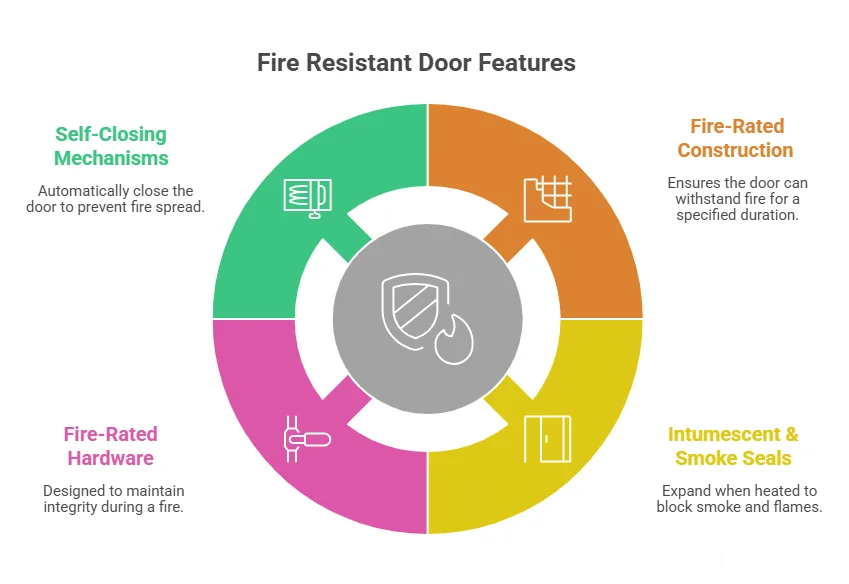
Fire resistant doors are engineered to provide reliable protection during fire emergencies. Their effectiveness comes from a combination of specialized materials, fire-rated components, and safety mechanisms that work together to prevent the spread of fire and smoke. Unlike standard doors, fire resistant doors are tested as complete assemblies to ensure they maintain their integrity under extreme conditions. Understanding these key features helps building owners, architects, and facility managers select the right fire-rated door for safety, compliance, and long-term performance.
Fire-Rated Door Construction
The foundation of a fire resistant door is its fire-rated construction. These doors are manufactured using materials specifically designed to withstand high temperatures and maintain structural stability during a fire.
Key construction features include:
- Fire-resistant steel, timber, or composite materials
- Reinforced internal core construction
- Heat-resistant insulation materials
- Tested and certified fire-rated design
- Available in 30, 60, 90, and 120-minute fire ratings
Benefits of fire-rated construction:
- Slows the spread of flames and heat
- Maintains door integrity during fire exposure
- Protects building occupants and assets
- Enhances overall fire safety performance
Intumescent & Smoke Seals
Intumescent and smoke seals are essential components that improve the fire and smoke containment capabilities of a fire resistant door.
Intumescent Seals:
- Installed around the edges of the door or frame
- Expand when exposed to high temperatures
- Seal gaps between the door and frame
- Prevent the passage of flames and heat
Smoke Seals:
- Restrict the movement of smoke and toxic gases
- Protect evacuation routes and escape corridors
- Improve visibility during emergencies
- Reduce the risk of smoke inhalation
Benefits of seals:
- Enhanced fire compartmentation
- Improved smoke control
- Increased occupant safety
- Better compliance with fire safety standards
Fire-Rated Hardware & Accessories
A fire resistant door is only as effective as the hardware used with it. Fire-rated hardware is specifically tested to perform under fire conditions and maintain the integrity of the door assembly.
Common fire-rated hardware includes:
- Fire-rated hinges
- Locks and latches
- Door handles
- Panic bars and exit devices
- Fire-rated vision panels
- Door coordinators for double-leaf doors
Benefits of fire-rated hardware:
- Supports door stability during a fire
- Prevents hardware failure under extreme heat
- Maintains fire door performance
- Ensures compliance with certification requirements
Self-Closing Mechanisms
A self-closing mechanism ensures that the fire door automatically closes after use, helping maintain the fire barrier at all times. This feature is critical because an open fire door cannot effectively contain fire or smoke.
Functions of self-closing mechanisms:
- Automatically closes the door after opening
- Prevents accidental door blockage or misuse
- Maintains fire compartment integrity
- Helps contain smoke and flames
Benefits of self-closing devices:
- Continuous fire protection
- Improved evacuation safety
- Enhanced smoke control
- Compliance with fire safety regulations
Together, these key features make fire resistant doors an essential part of any building’s fire protection strategy, providing dependable safety, regulatory compliance, and long-term peace of mind.
Fire Resistance Ratings Explained
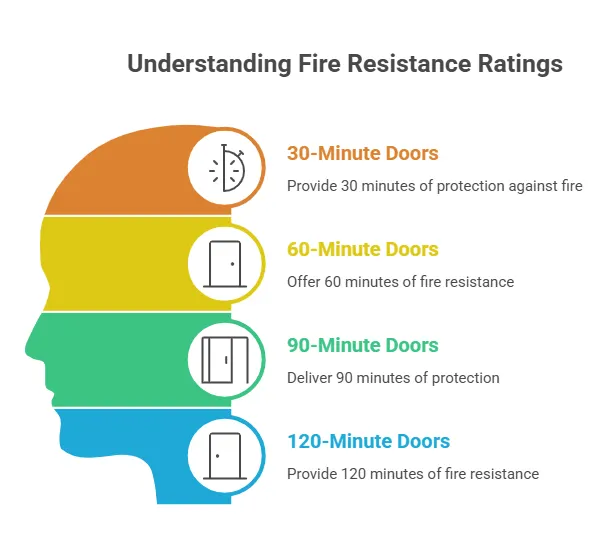
Fire resistance ratings indicate how long a fire resistant door can withstand exposure to fire while maintaining its structural integrity and preventing the spread of flames, heat, and smoke. These ratings are determined through standardized fire testing and are essential for selecting the right door for different applications. Fire resistant doors are commonly available in 30-minute, 60-minute, 90-minute, and 120-minute ratings, with higher ratings providing longer protection in high-risk areas. Choosing the appropriate fire rating helps ensure compliance with fire safety regulations and enhances overall building safety.
30-Minute Fire Resistant Doors
A 30-minute fire resistant door is designed to withstand fire for up to 30 minutes. These doors are commonly used in low to moderate fire-risk areas where shorter evacuation times are expected.
Typical applications:
- Residential apartments
- Office corridors
- Internal building partitions
- Small commercial buildings
Benefits of 30-minute fire doors:
- Provides essential fire compartmentation
- Supports safe evacuation
- Helps reduce fire spread
- Cost-effective fire protection solution
These doors are ideal for areas where basic fire protection and regulatory compliance are required.
60-Minute Fire Resistant Doors
A 60-minute fire resistant door offers enhanced protection by resisting fire for up to one hour. These doors are frequently installed in commercial and institutional buildings where higher levels of safety are necessary.
Typical applications:
- Commercial office buildings
- Schools and educational facilities
- Hotels and hospitality properties
- Healthcare facilities
Benefits of 60-minute fire doors:
- Increased fire containment time
- Better protection for occupants and assets
- Improved smoke and heat control
- Enhanced compliance with building regulations
This rating provides a strong balance between protection and practicality for many building types.
90-Minute Fire Resistant Doors
A 90-minute fire resistant door is designed for environments with higher fire risks and greater protection requirements. These doors help contain fire for an extended period, reducing damage and supporting emergency response efforts.
Typical applications:
- Warehouses and storage facilities
- Manufacturing plants
- Electrical and utility rooms
- High-risk commercial areas
Benefits of 90-minute fire doors:
- Extended fire resistance performance
- Greater protection for critical infrastructure
- Improved property and asset protection
- Reduced risk of fire spreading to adjacent areas
These doors are often selected for facilities where fire hazards are more significant.
120-Minute Fire Resistant Doors
A 120-minute fire resistant door provides the highest level of protection commonly used in buildings. Designed to withstand fire for up to two hours, these doors are installed in critical areas where maximum fire resistance is essential.
Typical applications:
- Industrial facilities
- Petrochemical plants
- Data centers and server rooms
- Power generation facilities
- Critical infrastructure projects
Benefits of 120-minute fire doors:
- Maximum fire containment capability
- Enhanced protection of life and property
- Superior safeguarding of critical assets
- Increased time for evacuation and firefighting operations
For high-risk environments, 120-minute fire resistant doors offer the highest level of safety and fire protection available.
Selecting the correct fire resistance rating depends on the building type, occupancy, fire risk assessment, and regulatory requirements. Using appropriately rated fire resistant doors helps create safer buildings while ensuring compliance with fire safety standards.
Types of Fire Resistant Doors
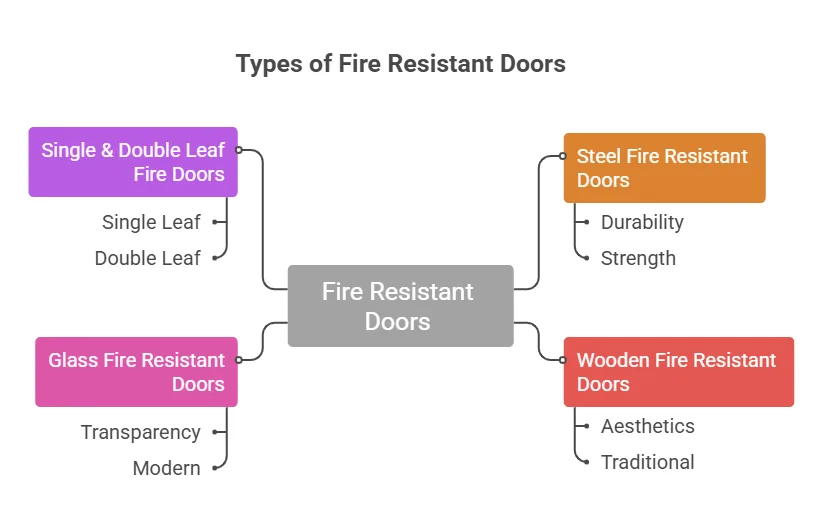
Fire resistant doors are available in various designs and materials to meet different fire safety requirements, building applications, and aesthetic preferences. While all fire resistant doors are designed to slow the spread of fire and smoke, the type of door selected depends on factors such as fire rating requirements, location, durability needs, and architectural design. The most common types include steel fire resistant doors, wooden fire resistant doors, glass fire resistant doors, and single or double leaf fire doors. Each type offers unique advantages while providing certified fire protection.
Steel Fire Resistant Doors
Steel fire resistant doors are among the most widely used fire-rated doors due to their strength, durability, and excellent fire resistance performance. They are commonly installed in commercial, industrial, and high-risk environments where maximum protection is required.
Key features of steel fire resistant doors:
- Manufactured from galvanized or stainless steel
- High resistance to fire, impact, and corrosion
- Available in multiple fire ratings
- Suitable for heavy-duty applications
- Long service life with minimal maintenance
Common applications:
- Factories and industrial facilities
- Warehouses and storage areas
- Electrical and utility rooms
- Commercial buildings and staircases
Wooden Fire Resistant Doors
Wooden fire resistant doors combine fire protection with a natural and aesthetically appealing appearance. They are specially engineered using fire-resistant cores and certified construction methods to achieve required fire ratings.
Key features of wooden fire resistant doors:
- Fire-rated timber or engineered wood construction
- Attractive design and finish options
- Good fire and smoke resistance
- Suitable for interior fire safety applications
- Available in various fire ratings
Common applications:
- Residential apartments
- Hotels and hospitality facilities
- Office buildings
- Educational institutions
Wooden fire doors are often selected where both fire protection and architectural aesthetics are important.
Glass Fire Resistant Doors
Glass fire resistant doors provide fire protection while maintaining visibility, natural light flow, and an open architectural appearance. These doors use specially tested fire-resistant glazing systems designed to withstand high temperatures.
Key features of glass fire resistant doors:
- Fire-rated glass panels
- Maintains visibility during emergencies
- Allows natural light transmission
- Available as fully glazed or partially glazed doors
- Certified for fire and smoke resistance
Common applications:
- Commercial offices
- Hospitals and healthcare facilities
- Shopping malls
- Hotels and public buildings
Glass fire doors offer an ideal balance between safety and modern design requirements.
Single & Double Leaf Fire Doors
Fire resistant doors are available in both single-leaf and double-leaf configurations to accommodate different building layouts and traffic requirements.
Single Leaf Fire Doors
Single leaf doors consist of one fire-rated door panel and are the most common type used in buildings.
Typical applications:
- Offices and residential units
- Staircases and corridors
- Utility and electrical rooms
Benefits:
- Space-efficient design
- Easy installation and operation
- Suitable for standard door openings
Double Leaf Fire Doors
Double leaf doors consist of two fire-rated door panels and are designed for larger openings and higher traffic areas.
Typical applications:
- Industrial facilities
- Warehouses
- Hospitals and educational institutions
- Large commercial buildings
Benefits:
- Accommodates wider openings
- Facilitates movement of equipment and personnel
- Provides effective fire protection for large access points
By understanding the different types of fire resistant doors, building owners and project managers can select the most suitable solution for their specific fire safety, operational, and architectural requirements.
Benefits of Fire Resistant Doors
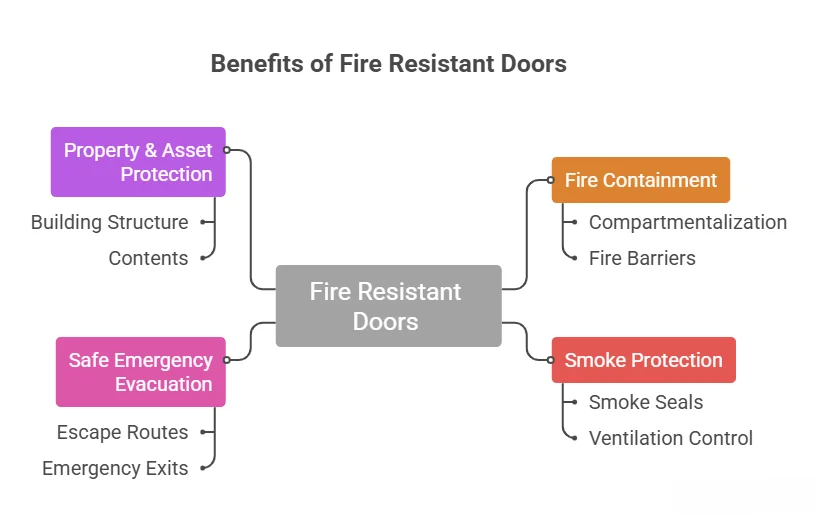
Fire resistant doors are a vital part of any building’s fire protection strategy. Designed to withstand fire, heat, and smoke for a specified period, these doors help protect lives, property, and critical infrastructure during emergencies. Beyond meeting fire safety regulations, fire resistant doors provide several practical benefits that improve overall building safety and resilience. From containing fire and smoke to supporting safe evacuation and minimizing property damage, fire resistant doors play a crucial role in reducing the impact of fire incidents.
Fire Containment
One of the primary benefits of fire resistant doors is their ability to contain fire within a specific area. By acting as a barrier, they help prevent flames and heat from spreading rapidly throughout a building.
Benefits of fire containment:
- Slows the spread of fire between compartments
- Protects escape routes and emergency exits
- Reduces damage to adjacent rooms and areas
- Supports firefighting and rescue operations
- Provides valuable additional response time
Effective fire containment helps limit the severity of fire incidents and improves overall building safety.
Smoke Protection
Smoke can spread faster than fire and often poses the greatest threat to occupants during an emergency. Fire resistant doors are equipped with smoke seals and intumescent seals that help control the movement of smoke and toxic gases.
Benefits of smoke protection:
- Restricts smoke from spreading throughout the building
- Protects staircases, corridors, and escape routes
- Improves visibility during evacuation
- Reduces the risk of smoke inhalation
- Creates safer conditions for building occupants
By controlling smoke movement, fire resistant doors significantly enhance life safety during fire emergencies.
Safe Emergency Evacuation
Fire resistant doors help maintain protected escape routes, allowing occupants to evacuate safely and efficiently during a fire. By slowing the spread of fire and smoke, they provide critical extra time for evacuation and emergency response.
Benefits for emergency evacuation:
- Keeps evacuation routes accessible for longer periods
- Supports orderly and safer evacuation procedures
- Protects stairwells and fire exits
- Assists emergency responders and firefighters
- Reduces panic and confusion during emergencies
Safe evacuation is one of the most important reasons fire resistant doors are required in many building types.
Property & Asset Protection
In addition to protecting people, fire resistant doors help safeguard buildings, equipment, inventory, and valuable assets. By limiting fire spread, they reduce the extent of damage and lower recovery costs after a fire incident.
Benefits of property and asset protection:
- Protects structural elements of the building
- Reduces damage to machinery and equipment
- Safeguards inventory and stored materials
- Minimizes business interruption and downtime
- Lowers repair and replacement costs
This added layer of protection helps businesses and property owners recover more quickly following a fire emergency.
Fire resistant doors provide a combination of life safety, fire containment, smoke control, and property protection benefits. Their ability to reduce fire-related risks makes them an essential investment for residential, commercial, institutional, and industrial buildings.
Where Are Fire Resistant Doors Used?
Fire resistant doors are installed in locations where controlling the spread of fire and smoke is essential for protecting lives, property, and critical infrastructure. These doors form an important part of a building’s passive fire protection system by creating fire-resistant compartments and protecting evacuation routes. Depending on the building type and fire risk level, fire resistant doors may be required by fire safety regulations and building codes. They are commonly used in residential, commercial, institutional, and industrial facilities to improve safety and ensure compliance with fire protection standards.
Residential Buildings
In residential properties, fire resistant doors help protect occupants by slowing the spread of fire and smoke between apartments, corridors, staircases, and common areas. They provide valuable time for residents to evacuate safely during emergencies.
Common residential applications:
- Apartment entrance doors
- Staircase access doors
- Corridor and lobby doors
- Utility and service rooms
- Basement and storage areas
Benefits in residential buildings:
- Improves occupant safety
- Protects evacuation routes
- Limits fire spread between units
- Reduces property damage
Fire resistant doors are particularly important in multi-story apartments and high-rise residential buildings.
Commercial Buildings
Commercial buildings often accommodate large numbers of employees, visitors, and customers, making fire protection a critical requirement. Fire resistant doors help compartmentalize buildings and protect high-traffic areas during emergencies.
Common commercial applications:
- Office corridors and stairwells
- Emergency exits and escape routes
- Conference rooms and common areas
- Shopping malls and retail centers
- Data rooms and utility spaces
Benefits in commercial buildings:
- Supports safe evacuation procedures
- Protects occupants and visitors
- Reduces fire and smoke spread
- Helps maintain business continuity
- Supports regulatory compliance
Fire resistant doors are a key element of fire safety planning in modern commercial properties.
Hospitals, Hotels & Schools
Hospitals, hotels, schools, and other public institutions require enhanced fire protection because they often house large numbers of people, including vulnerable occupants who may need additional assistance during evacuation.
Common applications:
- Patient wards and treatment areas
- Hotel guest room corridors
- School classrooms and administrative blocks
- Staircases and emergency exits
- Service and utility rooms
Benefits in hospitals, hotels, and schools:
- Protects patients, guests, students, and staff
- Maintains safe evacuation routes
- Controls smoke movement throughout the building
- Supports emergency response efforts
- Helps meet strict fire safety regulations
These facilities rely heavily on fire resistant doors to ensure occupant safety and minimize risks during emergencies.
Factories, Warehouses & Industrial Facilities
Industrial environments often contain machinery, electrical systems, combustible materials, and hazardous processes that increase fire risks. Fire resistant doors help isolate these hazards and limit fire spread across operational areas.
Common industrial applications:
- Manufacturing and production zones
- Warehouses and storage facilities
- Electrical switch rooms
- Control rooms and server rooms
- Chemical and hazardous material storage areas
Benefits in industrial facilities:
- Protects machinery and production equipment
- Limits fire spread in high-risk zones
- Reduces inventory and asset losses
- Minimizes operational downtime
- Supports compliance with industrial fire safety requirements
By protecting people, equipment, and critical infrastructure, fire resistant doors play an essential role in maintaining safety across industrial operations.
Whether used in homes, offices, hospitals, hotels, schools, factories, or warehouses, fire resistant doors provide reliable fire and smoke protection that helps create safer and more resilient buildings.
Fire Resistant Doors vs Normal Doors
When comparing fire resistant doors and normal doors, the differences go far beyond appearance. While both serve as entry and exit points within a building, their purpose, construction, and performance during a fire are significantly different. Fire resistant doors are specifically designed and tested to withstand fire, smoke, and heat for a defined period, whereas normal doors are primarily intended for everyday access, privacy, and aesthetics. Understanding these differences is essential for selecting the right door for safety-critical applications and ensuring compliance with fire protection requirements.
Material Differences
The materials used in a door determine its ability to withstand fire and maintain structural integrity during an emergency. Fire resistant doors are manufactured using specialized fire-resistant materials, while normal doors are generally made from standard construction materials.
Fire Resistant Door Materials:
- Fire-rated steel or stainless steel
- Engineered fire-resistant timber
- Mineral wool or rockwool core insulation
- Fire-rated glass panels
- Intumescent and smoke seals
Normal Door Materials:
- Solid wood or hollow-core wood
- MDF and plywood panels
- Standard aluminum or metal sheets
- Conventional glass inserts
- Standard hardware components
Key material advantages of fire resistant doors:
- Higher heat resistance
- Improved structural stability
- Better smoke containment
- Longer performance during fire exposure
Fire Performance Comparison
The most significant difference between the two door types is how they perform when exposed to fire. Fire resistant doors are tested and certified to withstand fire for a specific duration, while normal doors are not designed for fire protection.
| Feature | Fire Resistant Door | Normal Door |
| Fire Resistance | Yes | No |
| Fire Rating | 30, 60, 90, 120 Minutes | Not Rated |
| Smoke Control | Yes | No |
| Fire Containment | High | Very Limited |
| Structural Integrity During Fire | Maintained | Often Fails Quickly |
Benefits of fire resistant door performance:
- Slows the spread of fire and heat
- Protects escape routes and exits
- Provides additional evacuation time
- Supports firefighting operations
- Reduces fire-related damage
Normal doors may warp, crack, or collapse under high temperatures, allowing fire and smoke to spread rapidly throughout the building.
Safety & Compliance Benefits
Fire resistant doors are an important part of a building’s passive fire protection system and are often required by fire safety regulations and building codes. Their certified design helps improve occupant safety and supports compliance with legal requirements.
Safety benefits of fire resistant doors:
- Protects occupants during emergencies
- Maintains safe evacuation routes
- Reduces exposure to smoke and toxic gases
- Helps contain fire within designated compartments
- Supports emergency response efforts
Compliance benefits:
- Meets fire safety standards and regulations
- Supports building code compliance
- Assists with fire safety inspections and audits
- Improves risk management and insurance acceptance
- Demonstrates commitment to occupant safety
While normal doors are suitable for standard applications, they do not provide the fire protection, smoke control, or regulatory compliance required in many buildings. For environments where safety is a priority, fire resistant doors offer superior performance, greater protection, and long-term peace of mind.
Fire Resistant Door Standards & Certifications
Fire resistant doors must meet specific standards and certification requirements to ensure they provide reliable protection during a fire emergency. A fire resistant door is only effective if it has been tested and approved according to recognized fire safety standards. These standards establish performance criteria for fire resistance, smoke control, structural integrity, and overall safety. By complying with certified testing procedures and building regulations, fire resistant doors help protect occupants, reduce property damage, and ensure legal compliance for residential, commercial, and industrial buildings.
Fire Door Standards in India
In India, fire resistant doors are governed by various national standards and building regulations that specify testing methods, performance requirements, and installation guidelines.
Key fire door standards and regulations in India include:
- National Building Code (NBC) of India – Provides fire and life safety requirements for buildings.
- IS 3614 Part 2 – Covers fire check doors and their performance requirements.
- IS 17518 – Standard for fire-resistant door assemblies.
- Fire Safety Guidelines from Local Authorities – Additional requirements may apply based on building type and occupancy.
Importance of Indian fire door standards:
- Ensures consistent fire safety performance
- Defines fire resistance rating requirements
- Supports occupant protection and evacuation safety
- Promotes compliance with statutory regulations
Following approved standards helps ensure that fire resistant doors perform effectively during real fire incidents.
Testing & Certification Requirements
Before a fire resistant door can be certified, it must undergo rigorous testing under controlled fire conditions. These tests evaluate the door’s ability to withstand fire, heat, and smoke while maintaining structural integrity.
Key testing criteria include:
- Fire resistance duration (30, 60, 90, or 120 minutes)
- Structural integrity during fire exposure
- Insulation performance against heat transfer
- Smoke leakage control
- Performance of hardware, seals, and door assemblies
Certification requirements typically involve:
- Testing by accredited laboratories
- Verification of complete door assembly performance
- Documentation of fire rating results
- Compliance with applicable national and international standards
Benefits of certified fire resistant doors:
- Verified safety and reliability
- Proven fire performance
- Regulatory acceptance
- Greater confidence for building owners and occupants
Only certified doors should be used in areas where fire protection is required.
Compliance with Building Codes
Building codes specify where fire resistant doors must be installed and the minimum fire ratings required for different applications. Compliance is essential for obtaining approvals, maintaining occupancy permits, and ensuring building safety.
Areas commonly requiring fire resistant doors:
- Staircases and fire escape routes
- Corridors and common access areas
- Electrical and utility rooms
- Hospitals, hotels, and educational institutions
- Warehouses and industrial facilities
Benefits of building code compliance:
- Meets legal and regulatory requirements
- Supports successful fire safety inspections
- Enhances occupant protection
- Reduces liability and compliance risks
- Improves overall building resilience
By selecting certified fire resistant doors that comply with recognized standards and building codes, property owners can ensure a higher level of fire safety, operational reliability, and long-term protection for both people and assets.
How to Choose the Right Fire Resistant Door
Selecting the right fire resistant door is essential for ensuring effective fire protection, regulatory compliance, and long-term building safety. Not all fire resistant doors are the same, and the ideal choice depends on factors such as fire risk level, building type, occupancy, and installation location. A properly selected fire resistant door can help contain fire and smoke, protect occupants, and minimize property damage during emergencies. By considering fire ratings, materials, application requirements, and maintenance needs, building owners and project managers can choose a solution that delivers reliable protection and performance.
Selecting the Right Fire Rating
One of the most important factors when choosing a fire resistant door is determining the required fire resistance rating. The rating indicates how long the door can withstand fire while maintaining its integrity and protective performance.
Common fire ratings include:
- 30 Minutes – Residential corridors, apartments, and low-risk areas
- 60 Minutes – Offices, schools, hotels, and commercial spaces
- 90 Minutes – Warehouses, factories, and utility rooms
- 120 Minutes – Industrial facilities, data centers, and critical infrastructure
Factors influencing fire rating selection:
- Building occupancy type
- Fire risk assessment
- Local fire safety regulations
- Evacuation time requirements
- Location within the building
Choosing the correct rating ensures adequate protection while meeting applicable fire safety standards.
Choosing the Correct Material
Fire resistant doors are available in different materials, each offering unique advantages depending on the application and environmental conditions.
Common fire door materials:
- Steel Fire Doors – High durability, strength, and fire resistance
- Wooden Fire Doors – Attractive appearance with certified fire protection
- Glass Fire Doors – Fire safety combined with visibility and natural light
- Composite Fire Doors – Balanced performance and versatility
Material selection considerations:
- Fire resistance requirements
- Durability and maintenance needs
- Environmental conditions
- Architectural and aesthetic preferences
- Budget and operational requirements
Selecting the right material helps achieve the desired balance between safety, functionality, and design.
Application-Specific Requirements
Different areas within a building may require different types of fire resistant doors. Understanding the specific application is crucial for choosing the most suitable door system.
Examples of application-specific requirements:
- Residential Buildings: Apartment entrances, corridors, and staircases
- Commercial Buildings: Offices, escape routes, and service areas
- Hospitals & Schools: High-occupancy areas requiring enhanced safety
- Industrial Facilities: Electrical rooms, warehouses, and production zones
- Data Centers & Utility Rooms: High fire-risk areas requiring maximum protection
Key factors to evaluate:
- Occupancy levels
- Traffic frequency
- Exposure to harsh environments
- Security requirements
- Smoke control needs
Matching the fire door to its intended application improves both safety and operational efficiency.
Installation & Maintenance Considerations
Even the highest-quality fire resistant door will not perform effectively if it is improperly installed or poorly maintained. Correct installation and regular inspections are essential for ensuring continued compliance and fire protection performance.
Important installation considerations:
- Use certified fire-rated frames and hardware
- Follow manufacturer installation guidelines
- Ensure proper seal placement and alignment
- Verify self-closing device functionality
- Maintain required clearances and gaps
Maintenance best practices:
- Conduct regular inspections
- Check seals, hinges, and hardware for wear
- Ensure doors close and latch correctly
- Replace damaged components promptly
- Maintain records of inspections and repairs
Proper installation and ongoing maintenance help ensure that fire resistant doors continue to provide reliable protection throughout their service life.
By carefully evaluating fire ratings, materials, application requirements, and maintenance needs, building owners can select the right fire resistant door to maximize safety, compliance, and long-term performance.
Frequently Asked Questions About Fire Resistant Doors
Fire resistant doors are an essential part of modern fire safety systems, but many building owners, architects, and facility managers have questions about their purpose, performance, and compliance requirements. Below are answers to some of the most commonly asked questions about fire resistant doors.
What Is the Difference Between a Fire Door and a Fire Resistant Door?
The terms fire door and fire resistant door are often used interchangeably because both refer to doors designed to resist fire and smoke for a specified period. In most cases, there is no significant difference between the two terms.
Key characteristics of both:
- Designed to slow the spread of fire and smoke
- Tested and certified for fire resistance
- Available in different fire ratings
- Include fire-rated hardware and seals
- Used in residential, commercial, and industrial buildings
Primary purpose:
- Protect occupants during emergencies
- Maintain safe evacuation routes
- Reduce fire-related property damage
- Support compliance with fire safety regulations
Whether referred to as a fire door or a fire resistant door, the objective remains the same—enhancing building fire safety.
How Long Can a Fire Resistant Door Withstand Fire?
The fire resistance duration depends on the door’s certified fire rating. Fire resistant doors are tested to withstand fire exposure for a specific period while maintaining structural integrity and preventing the spread of flames and smoke.
Common fire resistance ratings:
- 30 Minutes – Suitable for residential and low-risk areas
- 60 Minutes – Common in offices, hotels, and schools
- 90 Minutes – Used in warehouses and industrial facilities
- 120 Minutes – Ideal for critical infrastructure and high-risk environments
Factors affecting performance:
- Door construction and materials
- Quality of seals and hardware
- Proper installation
- Regular maintenance and inspection
Selecting the appropriate fire rating depends on the building type, fire risk assessment, and regulatory requirements.
Are Fire Resistant Doors Mandatory?
Yes, fire resistant doors are mandatory in many buildings and locations where fire protection is required by fire safety regulations and building codes. Requirements vary depending on the building’s occupancy, height, use, and fire risk level.
Fire resistant doors are commonly required in:
- Apartment buildings and high-rise structures
- Commercial offices and shopping centers
- Hospitals, schools, and hotels
- Factories and warehouses
- Staircases, fire exits, and electrical rooms
Benefits of compliance:
- Meets legal and regulatory requirements
- Improves occupant safety
- Supports fire safety inspections and approvals
- Reduces liability and risk exposure
Always consult local fire safety regulations and building codes to determine specific requirements for your project.
How Can I Identify a Certified Fire Resistant Door?
A certified fire resistant door can be identified through its labeling, documentation, and safety features. Certification confirms that the door has been tested and approved according to recognized fire safety standards.
Ways to identify a certified fire resistant door:
- Certification label or rating plate attached to the door
- Fire rating marked as 30, 60, 90, or 120 minutes
- Manufacturer’s certification documents
- Presence of intumescent and smoke seals
- Fire-rated hinges, locks, and hardware
- Self-closing device installed
What to verify:
- Certification from approved testing agencies
- Compliance with relevant fire safety standards
- Proper installation as a complete fire-rated assembly
- Maintenance and inspection records
Choosing a certified fire resistant door ensures proven fire protection performance, regulatory compliance, and reliable safety during emergencies.
Conclusion
Fire resistant doors are one of the most important components of a comprehensive fire safety strategy. Designed to contain fire, smoke, and heat for a specified period, these doors help protect occupants, safeguard property, and support emergency response efforts during fire incidents. From residential apartments and commercial offices to hospitals, schools, warehouses, and industrial facilities, fire resistant doors play a vital role in reducing fire-related risks and improving overall building safety.
Throughout this guide, we explored the key features, fire ratings, types, benefits, applications, and certification requirements of fire resistant doors. We also examined how these specialized doors differ from standard doors and why they are essential for meeting modern fire safety standards. By creating effective fire compartments and protecting evacuation routes, fire resistant doors provide valuable time for occupants to escape safely while helping firefighters control the spread of fire.
Choosing the Right Fire Resistant Door for Safety & Compliance
Selecting the right fire resistant door requires careful consideration of fire rating requirements, building type, occupancy levels, and regulatory obligations. A properly chosen and certified fire door can significantly improve a building’s fire protection capabilities while ensuring compliance with applicable fire safety standards and building codes.
Key factors to consider when choosing a fire resistant door:
- Required fire resistance rating (30, 60, 90, or 120 minutes)
- Suitable door material for the application
- Certified hardware, seals, and accessories
- Compliance with national fire safety standards
- Proper installation and ongoing maintenance
- Building-specific fire safety requirements
Benefits of choosing the right fire resistant door:
- Enhanced life safety and occupant protection
- Improved fire and smoke containment
- Protection of valuable assets and infrastructure
- Compliance with fire regulations and building codes
- Reduced fire-related damage and financial losses
- Greater long-term building resilience
Investing in certified fire resistant doors is more than a regulatory requirement—it is a proactive step toward creating safer buildings, protecting lives, and ensuring long-term safety and operational continuity. By selecting the right fire-rated door system, property owners and facility managers can achieve both safety and compliance while building a stronger foundation for fire protection.